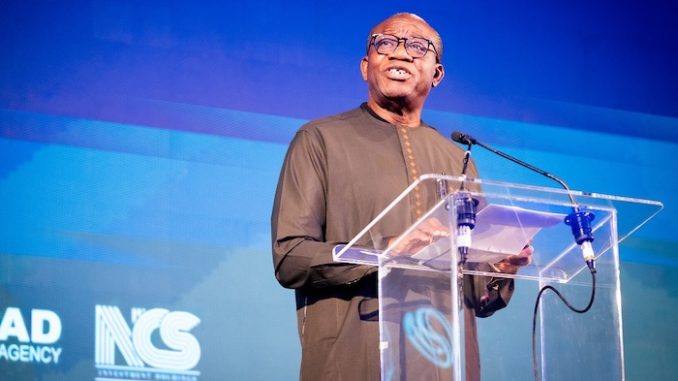
Former governor of Ekiti State and respected Nigerian politician Kayode Fayemi has called on African leaders to strengthen democratic institutions, promote unity across the continent, and prioritise accountable governance as part of efforts to secure lasting sovereignty and sustainable development.
Fayemi made the remarks while speaking on the future of governance and leadership in Africa, stressing that the continent’s progress depends largely on the strength of its institutions rather than the influence of individual political leaders.
According to him, Africa possesses enormous human and natural resources, but weak governance structures and political instability continue to slow development in many countries.
Fayemi emphasized that strong institutions are essential for protecting democracy, ensuring justice, and maintaining political stability across African nations.
He argued that countries with effective institutions are better positioned to manage economic growth, fight corruption, maintain peace, and deliver quality services to citizens.
The former governor warned against overdependence on powerful political figures, noting that sustainable progress can only be achieved when institutions remain stronger than individual personalities.
He also stressed the importance of independent judicial systems, transparent electoral processes, professional public institutions, and effective law enforcement agencies.
According to political analysts, many African countries still struggle with weak governance systems that often affect public confidence and national development.
Fayemi further urged African nations to deepen regional solidarity and cooperation in addressing common challenges facing the continent.
He noted that issues such as insecurity, poverty, unemployment, climate change, economic instability, and migration require collective action rather than isolated national responses.
The former governor encouraged African leaders to strengthen partnerships through regional organizations and continental initiatives aimed at promoting peace, trade, and development.
Observers say stronger cooperation among African countries could improve economic integration, expand trade opportunities, and increase the continent’s influence in global affairs.
Many experts also believe that unity among African nations is critical in addressing external economic pressures and geopolitical competition.
Another major issue highlighted by Fayemi was the need for accountable leadership across the continent. He stated that governments must remain transparent and responsive to the needs of citizens in order to maintain public trust.
According to him, accountability is essential for reducing corruption, improving service delivery, and ensuring that public resources are used effectively for national development.
He encouraged leaders to focus on policies that improve education, healthcare, infrastructure, employment opportunities, and economic growth rather than concentrating solely on political survival.
Political observers argue that public dissatisfaction in several African countries is often linked to poor governance, lack of transparency, and rising economic hardship.
Fayemi stressed that governments that fail to address the needs of their people may struggle to maintain long-term political stability.
The former governor also spoke about the meaning of sovereignty in modern Africa, explaining that true sovereignty goes beyond political independence from colonial rule.
According to him, real sovereignty involves economic strength, institutional stability, technological advancement, food security, and the ability of nations to make independent decisions in the interest of their citizens.
He noted that many African countries still face heavy dependence on foreign aid, imported goods, and external economic systems, which can limit long-term self-reliance.
Experts say building stronger local industries, improving education systems, and investing in innovation could help African countries become more economically independent.
Fayemi’s comments come at a time when discussions about governance, democracy, and economic reform are becoming increasingly important across the continent.
Several African countries are currently dealing with political instability, security challenges, youth unemployment, inflation, and public frustration over living conditions.
Analysts believe the future of Africa will depend heavily on how leaders respond to these challenges and whether governments can build systems that encourage inclusion, transparency, and economic opportunity.
The conversation around governance has also intensified as younger generations across Africa demand greater accountability and better leadership from public officials.
Despite the challenges facing the continent, Fayemi expressed optimism about Africa’s future, noting that the region still has significant potential for growth and transformation.
With a rapidly growing population, expanding digital innovation, and abundant natural resources, many experts believe Africa can become a major force in the global economy if governance and institutional reforms are properly implemented.
For many citizens across the continent, however, the ultimate expectation remains simple — leadership that delivers security, economic opportunities, stability, and a better quality of life.
As conversations about governance and sovereignty continue, Fayemi’s remarks add to the growing call for African leaders to prioritize long-term national development over short-term political interests.
Leave a Reply