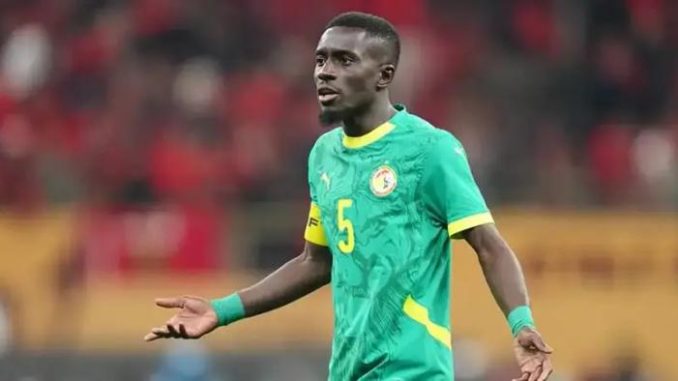
A fresh wave of controversy has rocked African football after Idrissa Gana Gueye, captain of Senegal national football team, publicly rejected a ruling by the Confederation of African Football (CAF), boldly declaring, “We are the champions!” despite the official decision.

The dramatic statement comes amid an ongoing dispute involving Morocco national football team, with tensions escalating over the legitimacy of a tournament outcome that has divided fans, officials, and pundits across the continent.
Gueye’s reaction signals more than just disagreement—it reflects deep frustration within the Senegalese camp. According to the midfielder, the team believes it rightfully earned victory on the pitch and should not be stripped of that achievement due to administrative or regulatory decisions.
In a symbolic and somewhat provocative gesture, Gueye went a step further by offering Senegal’s medals to Morocco. The move appears to be both an act of protest and a statement aimed at CAF, suggesting that if the governing body insists on its ruling, Senegal would rather relinquish the physical rewards than accept what they perceive as an unjust outcome.
The Confederation of African Football has yet to back down from its position, maintaining that its decision aligns with established rules and disciplinary procedures. While details surrounding the ruling remain a subject of debate, it reportedly stems from a contentious incident involving match conduct, eligibility, or regulatory compliance.
CAF’s stance has drawn mixed reactions. While some stakeholders support the enforcement of rules to maintain integrity, others argue that such decisions risk overshadowing the spirit of competition and the performances displayed on the field.
For Morocco, the situation places the team in an unusual spotlight. While they stand to benefit from CAF’s ruling, the gesture by Gueye adds a layer of complexity, potentially putting pressure on Moroccan officials to respond diplomatically.
So far, Morocco has maintained a measured silence, avoiding direct confrontation while allowing CAF’s decision to stand.
Unsurprisingly, football fans across Africa have taken to social media to voice strong opinions. Many Senegal supporters have rallied behind Gueye, praising his leadership and courage to speak out. Others, however, believe the matter should be resolved through official channels rather than public declarations.
The incident has reignited broader conversations about transparency, consistency, and fairness in African football governance.
The standoff between Senegal and CAF could have lasting implications. If the dispute escalates, it may prompt further reviews, appeals, or even reforms within African football administration.
For now, one thing is clear: Idrissa Gana Gueye and his teammates are standing firm in their belief that they are the rightful champions—regardless of what the official record may say.
This unfolding drama highlights the delicate balance between governance and the passion of the game. While rules are essential, moments like this remind us that football is deeply emotional—driven by pride, identity, and the relentless pursuit of glory.
Whether CAF revisits its decision or not, this controversy will remain a defining chapter in African football, sparking debates long after the final whistle.
Leave a Reply