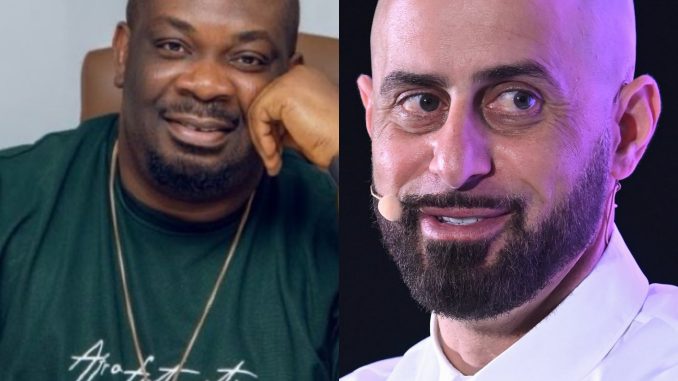
The global music industry has long been criticized for its uneven distribution of revenue, especially when it comes to African artists. Despite producing chart-topping hits and shaping global sounds like Afrobeats, many Nigerian and African musicians continue to earn relatively little from major streaming platforms such as Apple Music and Spotify. Now, a bold new initiative led by Don Jazzy and Ghazi Shami aims to change that narrative once and for all.

According to emerging reports, Don Jazzy, the influential Nigerian producer and founder of Mavin Records, is partnering with Ghazi Shami, the founder of Empire Records, to launch a new music streaming platform designed with fairness and equality at its core. The proposed platform is expected to address long-standing concerns about artist compensation, offering a more transparent and equitable payment system for musicians across Africa and beyond.
Streaming services have undoubtedly transformed the music industry, making it easier than ever for artists to distribute their work globally. However, the revenue model has been a major point of contention. Artists are typically paid fractions of a cent per stream, and earnings are often influenced by factors such as location, listener subscription type, and complex licensing agreements.
For many African artists, this system has proven especially challenging. Despite massive streaming numbers, their earnings often do not reflect their global impact. This has sparked widespread frustration and calls for reform within the industry.
The proposed platform by Don Jazzy and Ghazi Shami seeks to disrupt this status quo. At its core, the platform will prioritize fairness, ensuring that all artists—regardless of their location or label affiliation—receive equal pay for their streams.
This means removing barriers that have historically disadvantaged independent and African artists. By creating a level playing field, the platform aims to empower musicians to earn a sustainable income from their craft without relying heavily on endorsements, live performances, or external deals.
Unlike traditional streaming services, the new platform is expected to feature:
Equal Pay Structure: Artists earn fairly per stream, regardless of geography or popularity tier.
Transparency: Clear and understandable revenue distribution, eliminating hidden deductions.
Artist-Centric Policies: Tools and features designed to support creators directly, rather than prioritizing corporate profits.
Global Accessibility: While focused on African artists, the platform will be open to musicians worldwide, promoting inclusivity and diversity.
If successfully launched, this initiative could mark a turning point for the African music industry. It would not only boost the financial well-being of artists but also encourage more talent to emerge without fear of exploitation.
Don Jazzy’s involvement brings credibility and influence, while Ghazi Shami’s experience with Empire Records—known for supporting independent artists—adds a strong business foundation to the project.
The announcement has already generated buzz among fans and industry insiders. Many see it as a much-needed disruption that could pressure existing streaming giants to rethink their payment models.
However, challenges remain. Competing with established platforms like Spotify and Apple Music will require significant investment, user adoption, and strategic partnerships. Still, with the growing global appetite for African music, the timing could not be better.
The collaboration between Don Jazzy and Ghazi Shami represents more than just a new streaming service—it’s a movement toward fairness, recognition, and sustainability for artists. If executed effectively, this platform could redefine how music is valued and monetized, especially for African creatives who have long deserved a bigger share of the global music economy.
As the story develops, one thing is clear: the future of music streaming may be heading toward a more equitable and artist-friendly direction.
Leave a Reply