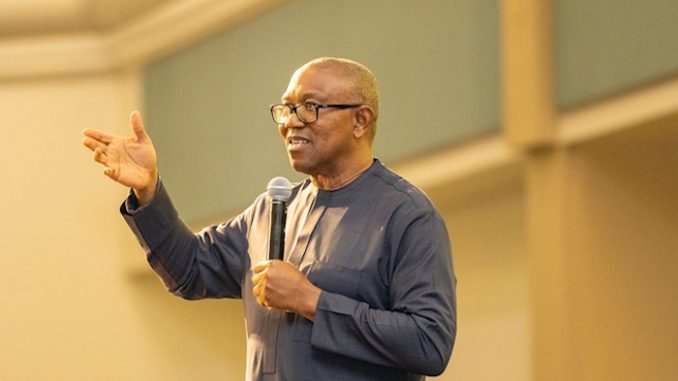
Former Anambra State governor and Nigerian political figure Peter Obi has once again raised an important conversation about the future of Africa. According to him, the continent possesses enormous natural wealth and human capital that should make poverty a thing of the past. His statement has sparked discussions across political, economic, and social circles, especially among young Africans who continue to demand better leadership and accountability.
Africa is widely regarded as one of the richest continents in terms of natural resources. From crude oil and natural gas to gold, diamonds, cobalt, lithium, and fertile agricultural land, the continent is blessed with materials that the global economy depends on heavily. Countries like Nigeria, South Africa, Congo, Ghana, Angola, and Zambia continue to export valuable resources to developed nations. Yet, despite this abundance, millions of Africans still struggle daily with hunger, unemployment, poor healthcare, and lack of basic infrastructure.
Peter Obi’s argument is simple but powerful: a continent blessed with so much should not remain underdeveloped. According to him, the major problem is not lack of resources but poor management, corruption, weak institutions, and leadership failures that have prevented African nations from reaching their full potential.
One of the strongest points in Obi’s statement is the importance of human resources. Africa has one of the youngest populations in the world. Millions of talented youths are actively involved in technology, entertainment, sports, entrepreneurship, and innovation. Across the continent, young Africans are building startups, creating digital solutions, and gaining global recognition in different industries.
Nigeria’s entertainment industry, especially Afrobeats, has become a global force. African tech startups are attracting billions of dollars in investment yearly. Young software developers, creators, engineers, and business owners are proving that the continent has the intellectual capacity to compete globally. However, many of these young people face major obstacles such as unstable electricity, poor education systems, unemployment, insecurity, and lack of government support.
Peter Obi believes that if African leaders prioritize education, healthcare, production, and investment in young people, the continent can experience rapid economic transformation. Instead of depending heavily on foreign aid and borrowing, African nations can build strong local industries capable of creating jobs and improving living standards.
Another issue connected to Obi’s statement is the constant exportation of raw materials without local processing. Many African countries sell crude materials cheaply to foreign nations, only to buy back finished products at expensive prices. This cycle limits economic growth and reduces opportunities for industrial development. Analysts have repeatedly argued that Africa must move beyond exporting raw resources and begin building industries that add value locally.
Infrastructure also remains a major challenge. Poor road networks, unstable power supply, weak healthcare systems, and limited access to quality education continue to slow development in many African countries. Experts believe that without fixing these critical sectors, economic growth may remain limited regardless of how many resources the continent possesses.
Corruption remains another serious concern. Billions of dollars meant for national development are often lost through embezzlement, wasteful spending, and lack of transparency. Peter Obi has consistently emphasized accountability and prudent management of public funds, arguing that leaders must serve the people rather than personal interests.
Despite the challenges, many Africans remain hopeful about the future. Across the continent, there is a growing demand for responsible leadership, economic reforms, and youth inclusion in governance. Social media has also amplified citizens’ voices, making it easier for people to hold leaders accountable and push for change.
Peter Obi’s statement serves as both a criticism and a challenge. It questions why a continent with vast oil reserves, minerals, fertile land, and energetic youths still battles extreme poverty and underdevelopment. More importantly, it calls on African leaders to rethink governance, invest in people, and create systems that can unlock the continent’s true potential.
Africa’s future may ultimately depend on how effectively its leaders manage resources, empower citizens, and build sustainable institutions. The continent has the manpower, the natural wealth, and the opportunities needed for transformation. What many believe is missing is the political will to turn those possibilities into reality.
Leave a Reply